Woodstop — Furniture Business Platform
A full-stack Django platform for a solid-wood furniture business serving South Indian architects, contractors, homeowners and retailers — public catalog, custom admin CMS, and a token-authenticated customer "quotation" (quote-list) system.
AJAX
Live Product FilteringDual Login
Password or Phone/OTPIn-House
Visitor AnalyticsToken Auth
REST API LayerStorefront & Admin Dashboard
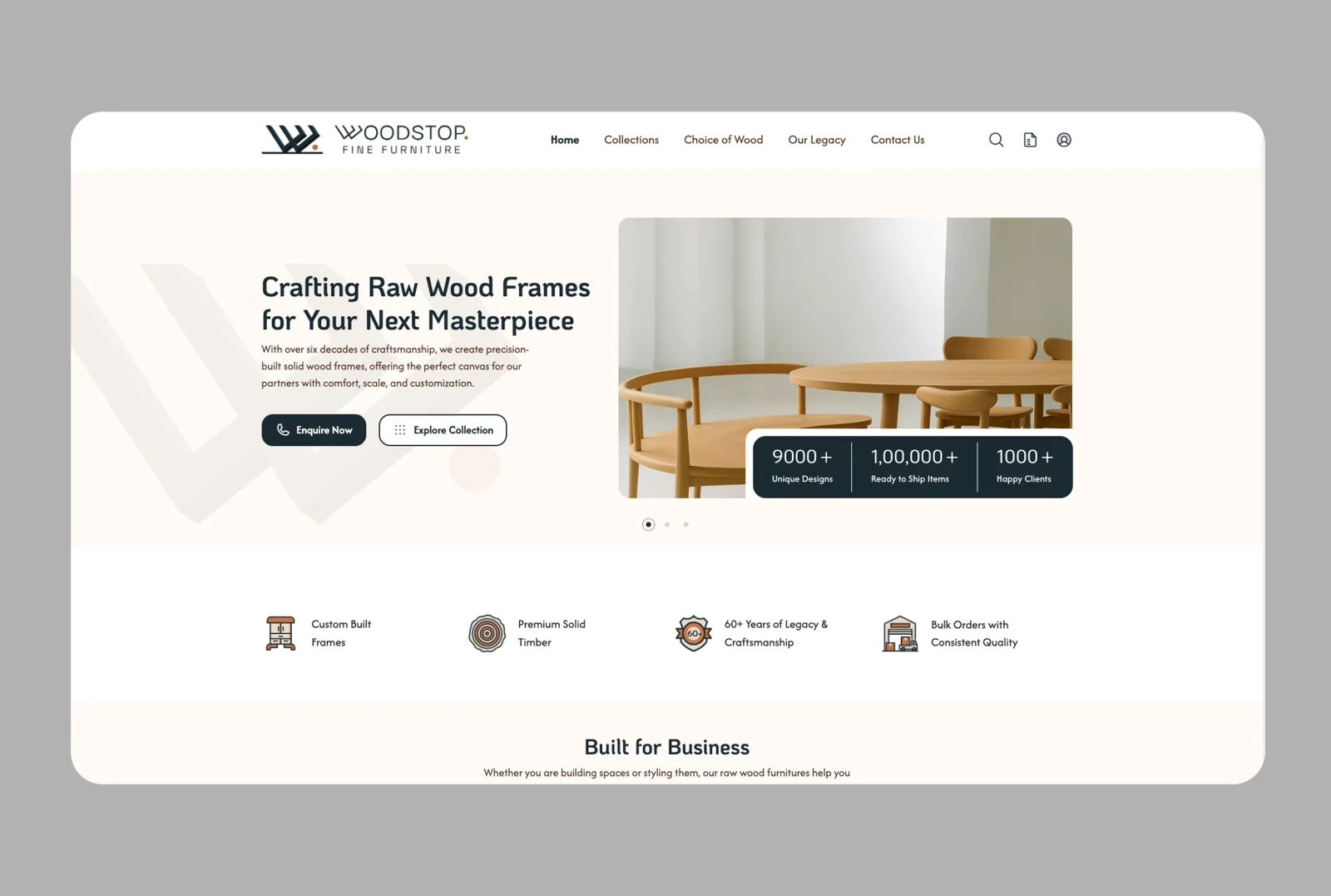 Homepage
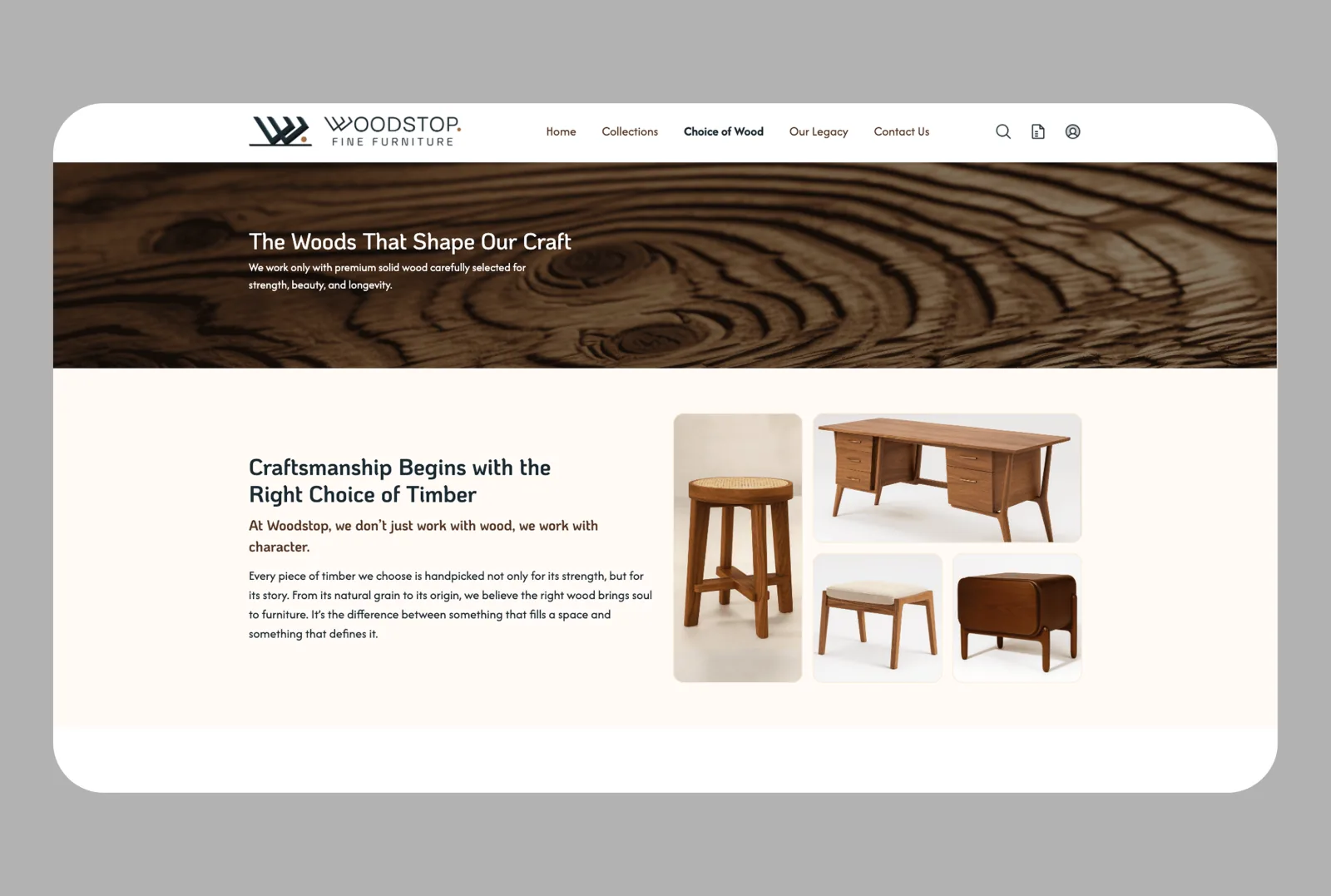 Choice of Wood
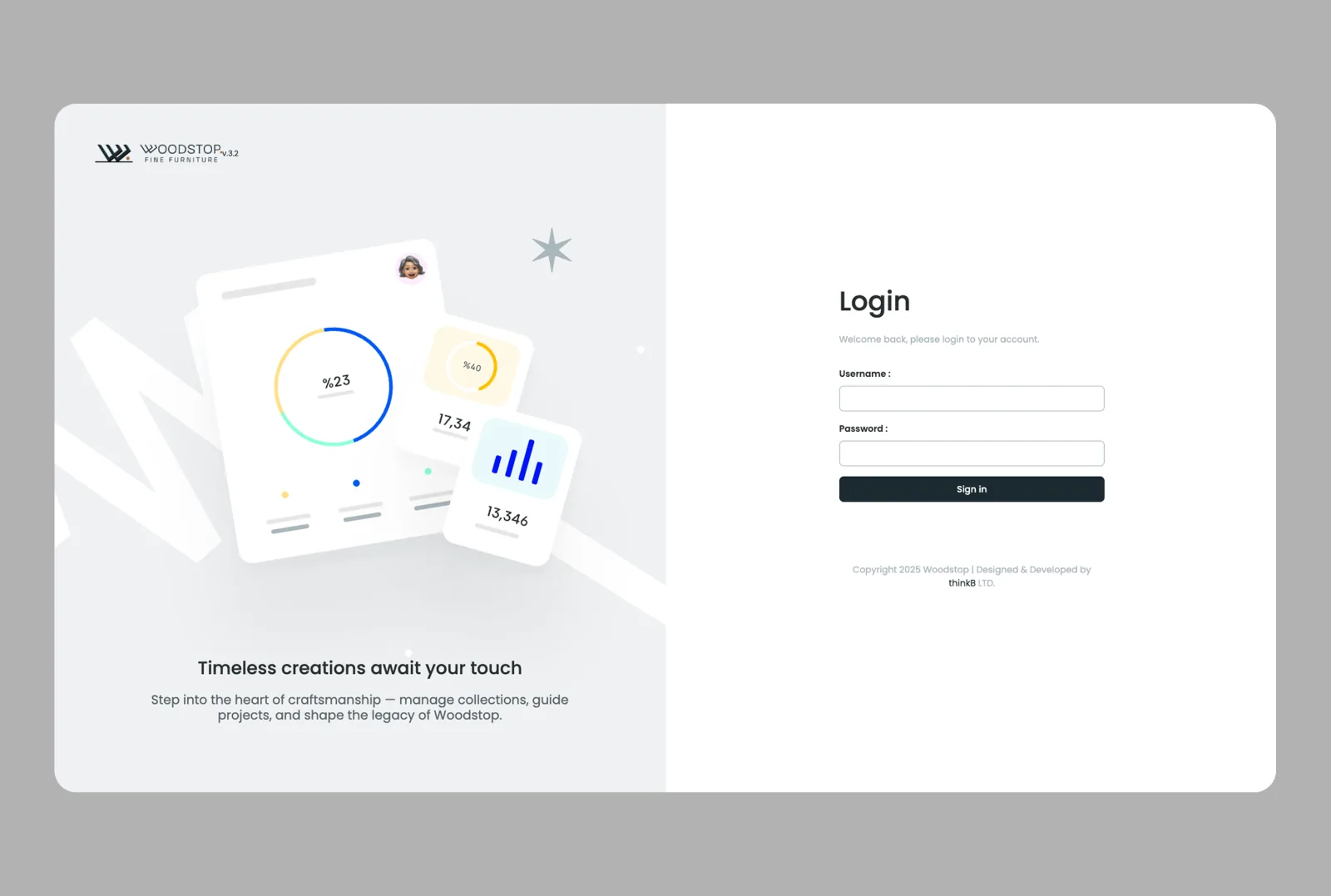 Admin Login
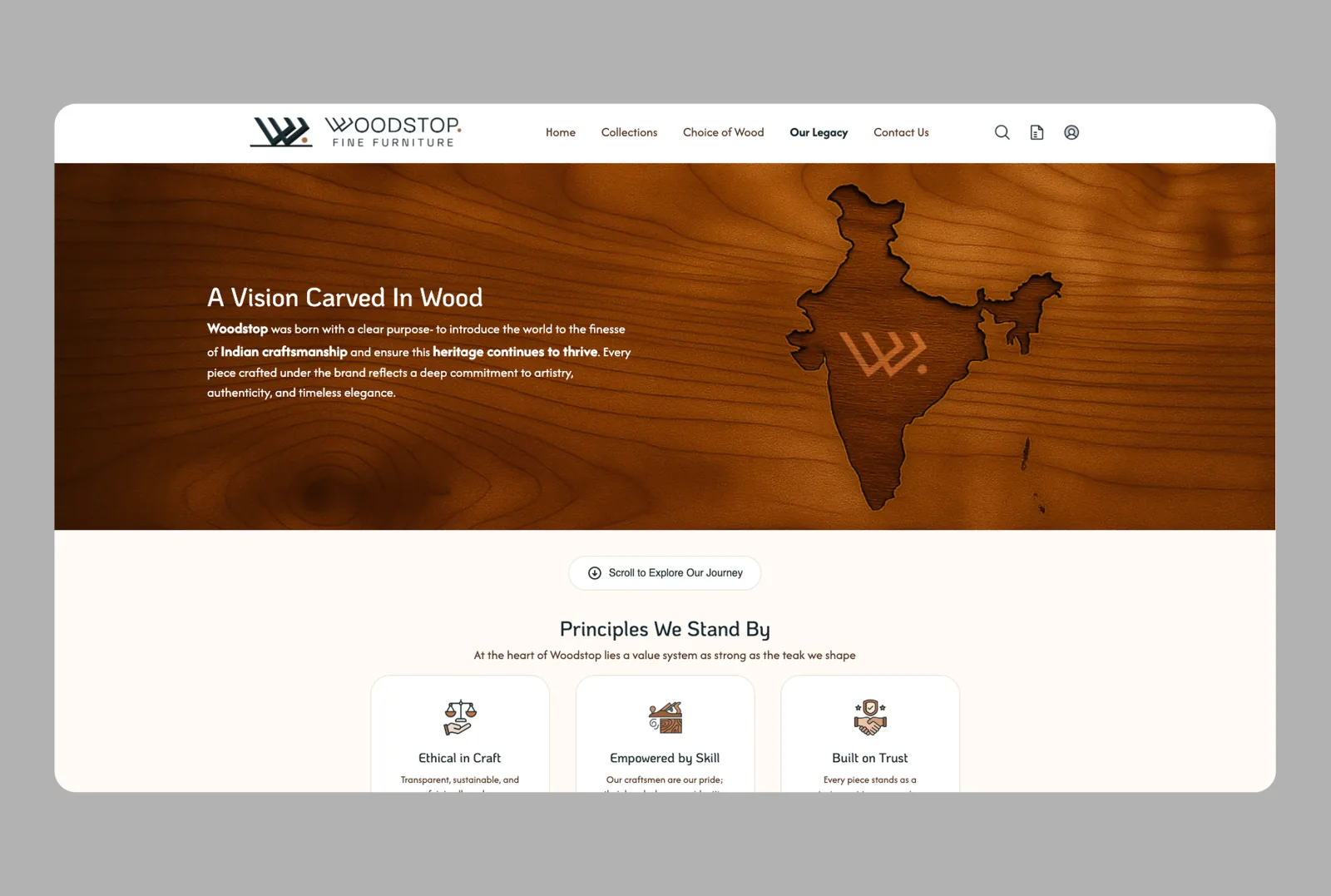 Our Legacy
What The Platform Does
AJAX Product Filtering
Category, subcategory, wood-type, search and sort — no page reload.
Dual-Mode Authentication
Password or phone+OTP login, unified behind one login view.
Quotation (Quote-List) System
Authenticated users build a quote-request list via token-secured REST APIs.
Custom Admin CMS
Full CRUD for products/categories/blog with multi-image management.
In-House Visitor Analytics
Device + monthly trend charts built from custom middleware, no external tool.
Segmented Landing Pages
Four audience-specific pages: architects, contractors, homeowners, retailers.
Stack & Integrations
Frontend
Backend
Database
Integrations
How It's Built
Woodstop is a single-app Django project where every business model — products, categories,
wood types, blog, quotations — is exposed two ways: form-based CRUD views for staff, and
DRF serializers/APIViews for the customer-facing JS interactions (OTP auth,
quotations, product autocomplete). There's no separate SPA build step; the frontend is
progressively enhanced server-rendered HTML calling those JSON endpoints via
fetch, with the DRF auth token kept in localStorage.
A custom TrackVisitorMiddleware records every non-admin request as a
Visit, which the dashboard aggregates with plain Django ORM (annotate,
TruncMonth) into device-type and monthly-trend analytics — a deliberate choice
to avoid a third-party analytics dependency for a catalog site this size.