Nonu — Student Mental Health App
A cross-platform (iOS + Android) React Native app for the "Live for a Cause" mental-health initiative — students sign in with a phone number and SMS OTP, browse wellness events, and book counselling sessions through an in-app calendar.
iOS + Android
One React Native CodebaseFirebase OTP
Phone AuthenticationCustom Client
Token-Authenticated RESTESLint + Husky
Enforced Code QualityApp Screens
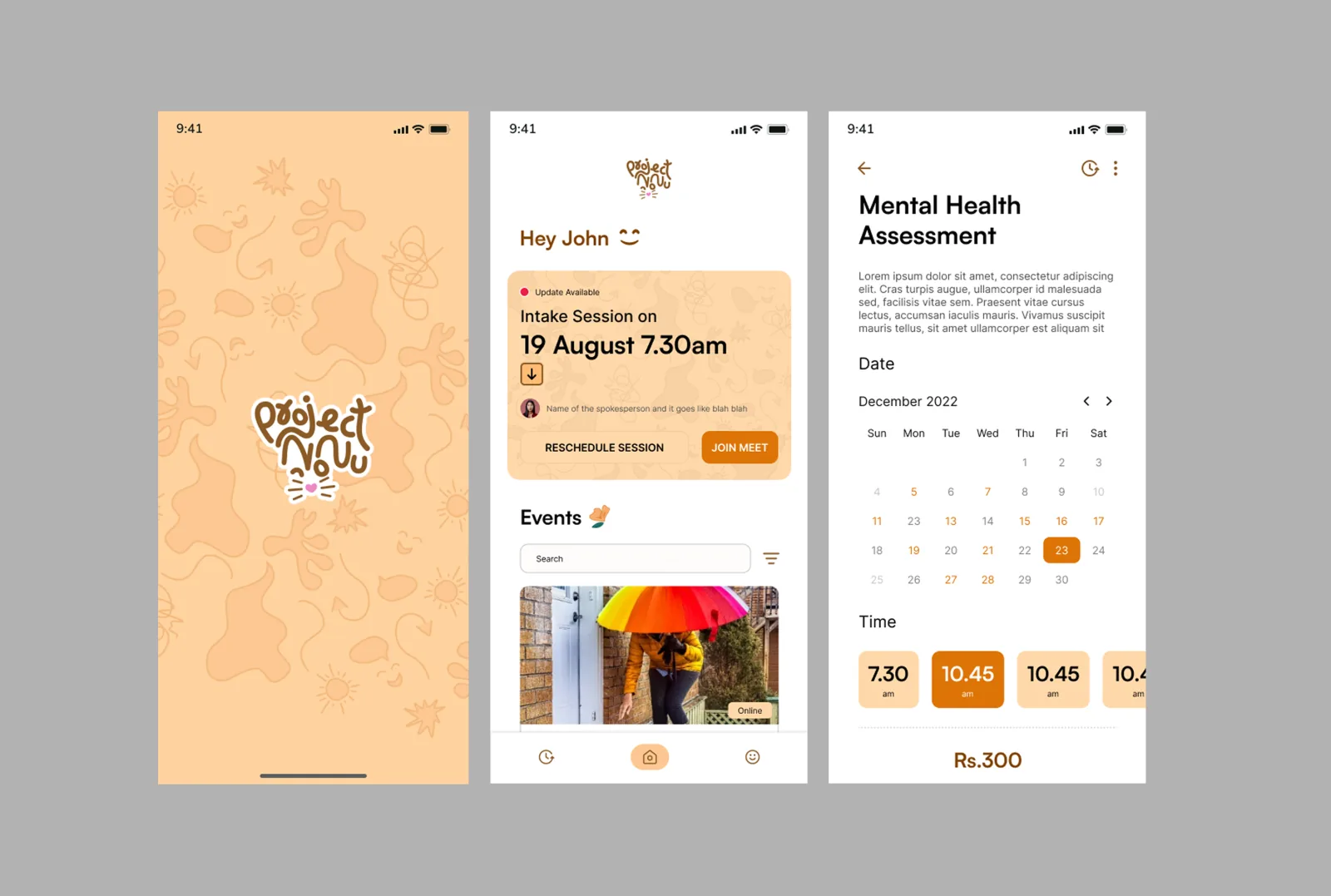 App Screens
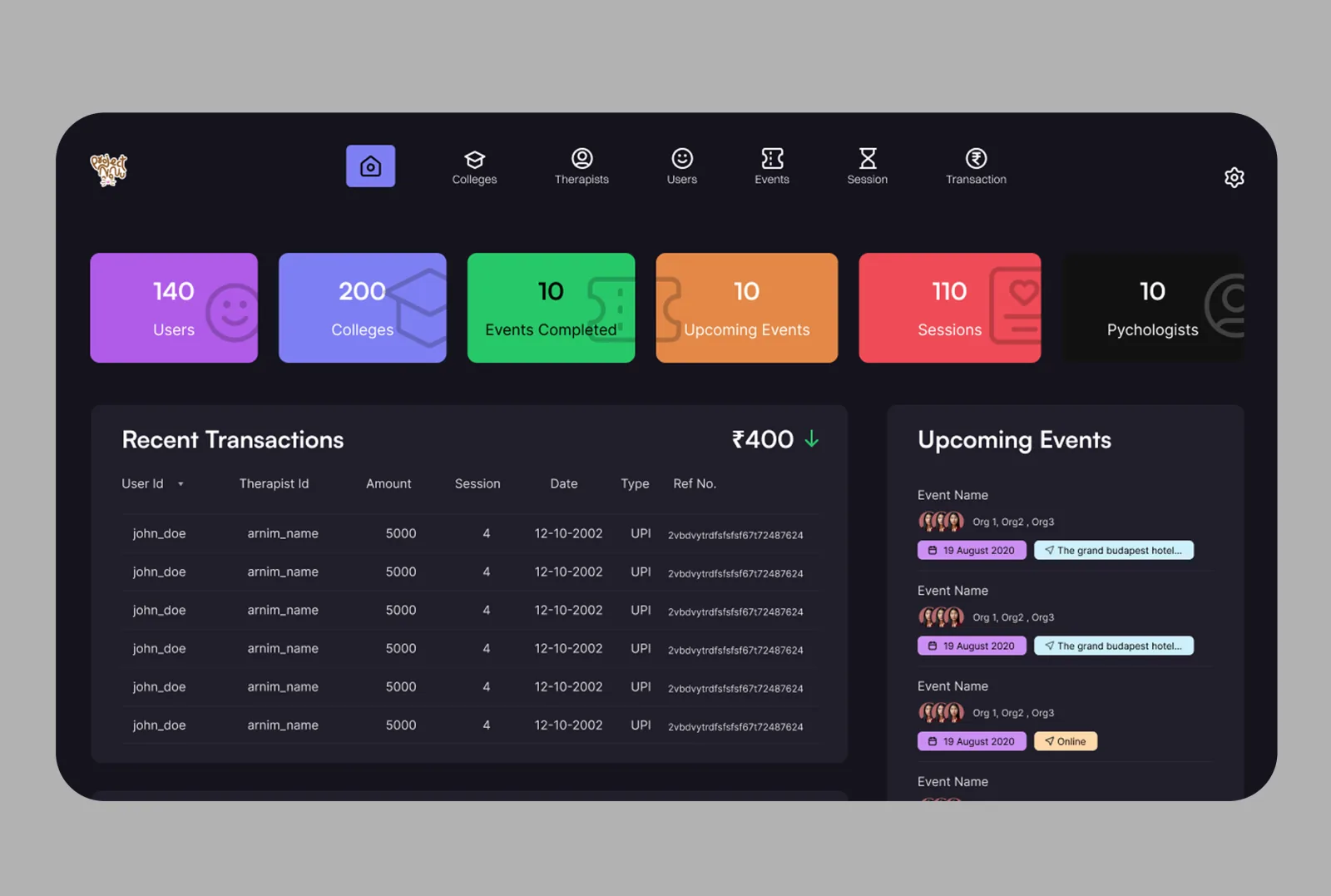 Admin Dashboard
What The App Does
Firebase Phone OTP Auth
6-digit SMS OTP with a 45-second resend cooldown and invalid-code handling.
Token-Aware Session Client
ID token persisted in AsyncStorage, auto-attached as a Bearer header on every call.
Session Booking Calendar
Custom month calendar plus a horizontal time-slot selector for assessments.
Home Dashboard
Profile-completion progress bar and a state-driven contextual banner system.
Session History & Reports
Monthly-grouped history with Intake/Cancelled/Missed rows and a scored report card.
Enforced Code Quality
ESLint, Prettier and a Husky pre-commit hook running lint-staged on every commit.
Stack & Integrations
Frontend
Auth & Data
Tooling
Platforms
How It's Built
Authentication drives navigation: Login/Register capture a phone number and route to an
OTP screen, which calls Firebase's signInWithPhoneNumber, confirms the SMS
code, force-refreshes the ID token, and stores it in AsyncStorage before moving into
onboarding. Home re-reads that token on every focus and redirects back to Login when it's
absent — a lightweight, client-side route guard rather than a server-enforced session.
All network calls run through one centralized client (src/api/api.js): a
single apiRequest() helper attaches the stored Bearer token, performs the
fetch, and normalizes error handling, so screens never touch fetch directly.
The UI layer is built from reusable, parametrized components — an EventCard,
five interchangeable state-selected banner components, and per-status history rows —
wired into a native-stack-over-bottom-tabs navigation structure.